In November 2025, DJI officially launched three agricultural drones, namely T100S, T70S, and T55, redefining the new standard for smart agricultural operations with its comprehensive and advanced technological capabilities. This marks another significant achievement in DJI's efforts to promote the intelligent and large-scale application of agriculture.
As a leader in agricultural technology, DJI Agriculture delivered an impressive performance in 2025: global shipments exceeded 200,000 units, marking a more than 100-fold increase compared to the startup period in 2015. As of October 2025, DJI has completed 3.2 billion mu of crop protection operations in China, continuously enhancing and empowering global agricultural production. Currently, DJI's smart agricultural solutions have covered more than 100 countries and regions worldwide, serving over 10 million agricultural practitioners, with operations spanning across six continents and more than 100 countries and regions.
Tracing back to its development journey, DJI Agriculture's exploration began in 2012, when DJI introduced globally outstanding drone technology into the agricultural sector. In 2015, DJI Agriculture was officially established, adhering to the vision of "making agriculture easier and life better". It is committed to providing users with smart agricultural solutions based on drone technology and promoting innovation and progress in global agriculture.
Shen Xiaojun, the global market leader of DJI Agriculture, said in an interview with "Business School": "Agricultural drones are not only modern tools for enhancing efficiency, but also a key force in the modernization of agriculture and rural areas. They are profoundly changing the face of agricultural production in China, which has been around for thousands of years." After 13 years of deep cultivation, DJI Agriculture is continuously promoting the large-scale application of intelligent technology in the agricultural field, helping agriculture move towards a safer, more efficient, and sustainable future.
01
From component suppliers to complete machine R&D
DJI's entry into the agricultural market is driven by both internal factors, such as technology-driven demand and demand-driven market growth, and external factors, such as environmental constraints.
Before 2012, as DJI's flight control system technology gradually improved, many industry insiders began to explore whether multi-rotor drones could be applied in more life and production scenarios. Cheng Zhongyi, a senior solution engineer for agriculture at DJI, said in an interview with "Business School": "At the beginning, DJI's self-positioning in vertical industry applications was still just as a component supplier. At that time, there were already manufacturers on the market who began assembling multi-rotor agricultural drones. These DIY manufacturers used DJI's flight control, power, propellers, and other key components for agricultural plant protection assembly machines. DJI's R&D team also began to invest more and more in plant protection machine support."
However, situations where DIY products lead to unstable product quality and severely affect equipment usage occur from time to time. "We realized that the malfunctions in assembling agricultural drones are not a problem with individual devices, but a systemic issue. Only a systemic solution can truly address the stability issue. In 2014, drone technology began to stabilize and mature. DJI, while supplying agricultural machinery parts and equipment to the industry, also delved into the research and development of complete agricultural drones," said Cheng Zhongyi.
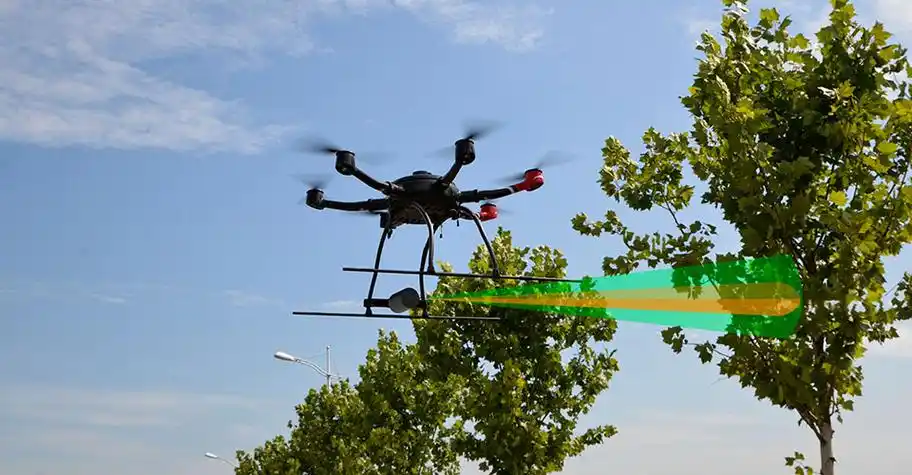
Since then, DJI Agricultural Machinery has undergone several significant stages of development. Technologically, it has leveraged the technical capabilities accumulated from DJI's consumer-grade drones, such as image transmission technology, flight control technology, battery technology, and RTK high-precision positioning technology, and applied them to DJI's agricultural drones. Moreover, it was the first to apply millimeter-wave radar technology in the field of agricultural drones, addressing the issue of flight safety in complex agricultural environments. Cheng Zhongyi added, "This is a key factor restricting the promotion and application of agricultural drones."
In terms of the external environment, food security is a persistent major issue in governing the country. As the saying goes, "Food is the paramount necessity of the people." While "having enough to eat" is not a challenge for the current Chinese population, the shadow of famine has always loomed over human history. Despite China maintaining a relatively high level of food self-sufficiency and reserves for a long time, it has always fed one-fifth of the world's population with less than 9% of the world's arable land. Therefore, farmland protection and agricultural technological progress are strategic ideas repeatedly emphasized at the Central Economic Work Conference. Strictly guarding the 1.2 billion-mu (180 million-acre) farmland red line, accelerating technological progress, and promoting agricultural modernization are essential to ensuring the country's food security.
However, at the same time, weak agricultural mechanization, labor shortage, and severe population aging are also key factors restricting agricultural production. Currently, among the agricultural production links such as "plowing, sowing, managing, and harvesting" in China, the weakest link is "managing".
Cheng Zhongyi said, "The efficiency of drone technology in the 'management' of farmland is evident to all. It provides efficient technical support for pest and disease control in major grain and economic crop areas, featuring high efficiency, separation from human intervention, and water and pesticide conservation. It can effectively contribute to agricultural mechanization and environmental protection, which are major livelihood issues. In recent years, it has grown into an indispensable backbone force in China's agricultural production."
The competition in the drone industry is undeniably fierce nowadays, with the wave of technological innovation sweeping across every corner. DJI's sustained outstanding achievements in multiple fields such as consumer drones, handheld imaging, and even agricultural production can all be attributed to the robust vitality of DJI's core DNA in different environments. Shen Xiaojun specifically explained this from three points.
First and foremost is the deep reuse and innovation of technology. DJI has honed its core technologies in consumer-grade and imaging fields such as flight platforms, perception systems, image transmission, and algorithms. These technologies have found new and more challenging application spaces in agricultural machinery scenarios, and DJI has continuously deepened and innovated in this process.
Secondly, it boasts extremely efficient organizational, supply chain, and channel capabilities. Whether it's DJI employees, agents, partners, or the world-leading supply chain and channel system, they ensure that DJI can still demonstrate rapid product iteration, channel penetration, and efficient after-sales service coverage when facing the vast and fragmented agricultural market.
Lastly, there is the product philosophy and ideology of seeking truth. Whether it's handheld imaging devices that are easy to use and shoot well, or the precise care for every seedling, DJI's underlying logic remains the same: to use technology to solve the most real and core problems in reality. The pain points in the agricultural sector are efficiency, safety, cost, and effectiveness, which are precisely the targets of DJI's agricultural drone technology.
02
Build an "all-around strong person" for agricultural drones
DJI Agriculture has launched three new models, aiming to meet the comprehensive needs of agricultural practitioners ranging from large-scale farms to individual farmers, so that every agricultural practitioner can enjoy the achievements of modern agricultural technology.
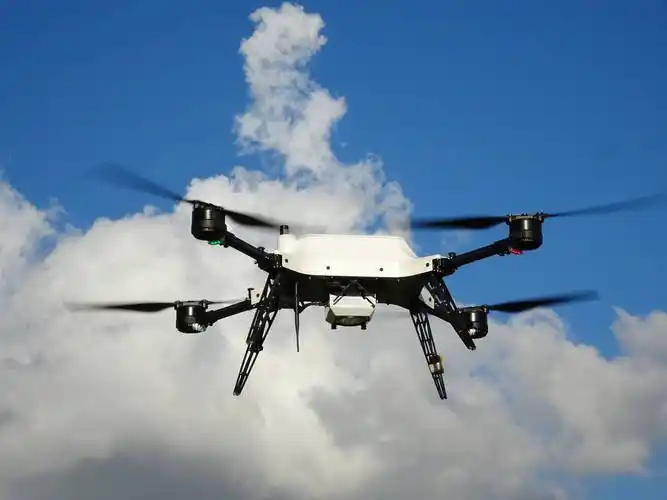
In November 2025, DJI Agriculture officially launched three agricultural drones: T100S, T70S, and T55. Each model has different application scenarios and main functions. Cheng Zhongyi introduced the characteristics and functions of the three models respectively: Among them, T100S and T70S, with intelligent safety as their core, have elevated the operational capabilities, safety performance, and user experience of agricultural drones to a new level through comprehensive technological innovation.
As the flagship model released by DJI Agriculture in 2025, the T100S defines the "hexagonal warrior" in agricultural drones, with comprehensive improvements in stability, efficiency, intelligence, safety, multi-scenario adaptability, and cost-effectiveness. It has undergone a complete upgrade in aspects such as spraying, seeding, and hoisting. In terms of spraying performance, it fully meets the high water volume requirements of certain scenarios; the seeding system is equally excellent, featuring ultra-large capacity and flow rate, significantly enhancing operational efficiency and greatly simplifying the operation process. In terms of hoisting capabilities, the new cargo obstacle avoidance algorithm and automatic anti-sway function make hoisting operations smoother and safer, while the new pull rod-type rope release mechanism further ensures operational safety.
The DJI T70S offers a more competitive and cost-effective choice for users with relatively smaller plots or lower annual workload. Its spraying, seeding, and lifting capabilities can meet the needs of most large-scale farmers for personal use and services, as well as small and medium-sized orchards. It is the flagship choice for its high cost-effectiveness. In terms of perception system, like the T100S, the T70S is also equipped with a 256-line LiDAR, a new generation of millimeter-wave radar, and a four-eye fish-eye vision system. It supports advanced features such as AR-assisted imaging, no-flight survey imitation, and integrated circle measurement, making it an ideal choice for medium-sized farms and professional service teams.
The DJI T55, specifically designed for solo operations, redefines the entry-level agricultural drone standards with its lightweight body and minimalist control logic. The overall structure has been significantly optimized, with the addition of a carrying handle, allowing for easy equipment transportation by a single person. A new minimalist operation mode has been introduced, enabling fully automated operation planning with just a mobile phone, significantly lowering the operational threshold. Additionally, hardware upgrades have been made, ensuring that the T55 not only achieves economical endurance but also guarantees efficient continuous operation, making it an ideal choice for personal use and affordability.
Overall, the DJI agricultural drone T series has a wide range of application scenarios. Currently, most agricultural crops in China, including grain crops, economic crops, and fruit trees, are actually equipped with agricultural drones. The penetration rate can reach over half, and the applications are quite comprehensive. There are different application scenarios in the three dimensions of spraying, sowing, and hoisting.
Firstly, regarding spraying, Cheng Zhongyi said, "Taking rice and wheat as examples, agricultural drones are basically used throughout the entire process, from seed sowing and fertilizing to post-sowing pre-emergence closure, stem and leaf weeding, as well as insecticidal and fungicidal treatments. In many mature application areas, agricultural drones are basically used by farmers before harvesting, especially for rice management. Besides food crops, agricultural drones are also present in large-scale planting areas of economic crops such as navel oranges in Jiangxi and citrus in Sichuan."
For sowing, drone operations can be utilized for base and topdressing fertilization of rice and wheat, as well as mid-to-late stage fertilization of corn. Additionally, agricultural drones can be employed for 90% of rapeseed sowing tasks, demonstrating a remarkably high penetration rate. In terms of lifting and transportation, agricultural machinery primarily focuses on agriculture, forestry, animal husbandry, and fisheries, capable of lifting and transporting saplings, infected trees, and crops in complex terrains.
After introducing drones for agricultural production, farmers have significantly improved their production efficiency while significantly reducing production costs. Cheng Zhongyi gave an example: "Before 2015, Heilongjiang was the fastest-growing mechanized region in China, but manual operations were still used for fertilizer spreading or pesticide spraying. The average price of pesticide spraying was 10 yuan per mu, and the operational efficiency was low. However, after the introduction of drone operations in Heilongjiang, the average price of pesticide spraying has dropped to around 2 yuan per mu, with a cost reduction of 80% and an improvement in efficiency." Taking Heilongjiang as an example, when the operation area is 20,000 mu, the average return on investment can be achieved in about one year, while the return on investment for professional drone pilots can be accelerated to about two months.
03
AI empowers and opens a new stage of "aerial intelligent driving"
DJI has integrated a smart brain into its agricultural drones, enabling them to make autonomous decisions and retain memories during flight.
As a high-tech enterprise, DJI has always maintained an open attitude towards artificial intelligence and fully embraced it.
Cheng Zhongyi said, "In the long run, artificial intelligence will definitely be deeply involved in the agricultural sector, assisting users in complex field operations. Through AI algorithm platforms, it can independently perform virus-like analysis and provide suggestions on operation parameters and pesticide usage plans." Currently, the application of artificial intelligence in agricultural drones mainly focuses on operational convenience and intelligence, with specific implementation divided into three steps.
Firstly, the newly released T100S and T70S drones have been equipped with LiDAR, which not only boasts high recognition accuracy but also enables them to adapt to various terrains through continuous training in the complex field environment. Cheng Zhongyi explained, "Our goal is to enable farmers to use drones after simple learning, even in very complex terrains. The achievement of this goal mainly relies on the self-learning ability of the drone and the continuous adjustment of its flight path."
Secondly, DJI has integrated a smart brain into its agricultural drones, enabling them to make autonomous decisions and retain memories during flight, thereby facilitating better and faster agricultural operations. During operations, agricultural drones can store complex situations they encounter in their flight systems, allowing them to automatically bypass obstacles during subsequent takeoffs and ensuring safe flight.
Not only that, DJI has also developed an agricultural service assistant. By scanning crops with a mobile phone, it can automatically provide customized crop types and operation suggestions. Users only need a mobile phone, and by connecting to the AI algorithm platform, it can help users make independent decisions.
In addition to agricultural drones, Cheng Zhongyi also introduced the smart agriculture platform established by DJI. "Photos are taken using the M3M multispectral drone, uploaded to the smart agriculture platform for image stitching and multivariate analysis. This analysis can identify high-level terrain features and seedling emergence rates, and provide intelligent decision-making." He also added, "In addition, through comprehensive analysis of various NDVI indices, it is possible to analyze whether the soil is deficient in nitrogen, phosphorus, potassium, and other elements, and to address the issue in a targeted manner." Through comprehensive analysis obtained from the DJI smart agriculture platform, combined with on-site ground analysis by staff, a "prescription map" is ultimately generated, achieving the comprehensive effect of reducing fertilizer use and increasing crop yield in agriculture.
Cheng Zhongyi concluded, "The smart agriculture platform serves as a foundational platform for the entire Dajiang smart agriculture ecosystem, capable of supporting all smart agriculture-related functions within Dajiang's agricultural sector."
DJI Agriculture plays a significant role in enhancing global food production per unit area, increasing crop yields, and ensuring food security. Beyond the domestic market, DJI continues to expand into overseas markets. DJI drones can boost crop yields and directly improve operational efficiency in countries such as Japan, South Korea, Thailand, Vietnam, the United States, and Brazil. When entering each regional market, DJI Agriculture typically considers several core elements: product adaptability, the scale of cultivated land, and the compatibility with local regulations and policies.
Shen Xiaojun said, "Taking product adaptability as an example, in 2017, we took the lead in entering the rice-growing regions of Southeast Asia, where drone applications were mainly focused on field spraying at that time. Since 2019, we have begun to expand into the Latin American market, which is dominated by dryland crops. Our products have also been upgraded simultaneously, with increased spray volume to better adapt to local operational needs. This strategy has achieved remarkable results. By 2024, shipments in relevant regions had increased by more than 30 times."
Cheng Zhongyi also gave an example: "When locust plagues occur in Africa, DJI can efficiently intervene and manage the outbreak of pests and diseases through high-speed agricultural drone operations for crop protection. At the same time, DJI can also quickly deploy tens of thousands of drones to efficiently respond to complex meteorological conditions and outbreaks of disasters in various regions."
04
The dual reduction of price and technical threshold
Enjoying the fruits of modern agricultural technology at a low cost is an important path towards achieving Chinese-style agricultural modernization.
The high price and difficulty in operation of agricultural drones can easily deter many small and medium-sized farmers, creating technical barriers. Shen Xiaojun said, "Currently, it is not feasible for a large number of small farmers in China to purchase large-scale intelligent agricultural machinery on their own. With DJI's continuous innovation, the drone plant protection service team they have launched can provide socialized services to meet the needs of self-use farmers, allowing small farmers to have multiple options and enjoy the fruits of modern agricultural technology at a low cost. This is an important path towards achieving Chinese-style agricultural modernization."
Regarding price, Cheng Zhongyi explained, "The price of agricultural drones has dropped from 10,000 yuan per liter in 2015 to 500 yuan per liter now. The latest T55 model has seen its price drop to 28,000 yuan. Currently, the government also provides subsidies for agricultural machinery, so farmers only need to pay a little over 10,000 yuan to actually acquire a drone, which is affordable for most growers.". ”
Besides lowering prices, another crucial aspect is reducing the technical threshold. "In the past, drone obstacle avoidance and safety systems were not well-developed, requiring pilots to master a wide range of skills. Nowadays, drone models are equipped with the most advanced visual systems, millimeter-wave radars, and some even come with lidar. With this comprehensive set of technologies, the operational difficulty for farmers to master crop protection drones has been significantly reduced," said Cheng Zhongyi.
The No. 1 central document of 2025 incorporates low-altitude technology into the smart agriculture scenario. DJI's agricultural drones and corresponding aerial drones are essential components in building this smart agriculture scenario. Compared to European and American countries, the development of smart agriculture in China is relatively slow, and its foundation is very weak. Cheng Zhongyi believes that promoting the development of smart agriculture requires the country to incorporate the low-altitude economy into smart agriculture, guide its development, and make long-term plans.
As an independent business line, DJI Agriculture primarily focuses on agricultural needs as its development direction. In the early stage, there was only one product line, agricultural drones. Later, in response to market demand, DJI Agriculture launched the M3M multispectral agricultural drone, as well as corresponding hardware and software platforms. Regarding future planning, "If there is market demand and it aligns with DJI's development direction, DJI Agriculture may also consider developing more products to enter the market, in order to promote the development of smart agriculture," said Cheng Zhongyi.