Last January, the Brazilian government, in collaboration with local aviation company Eve Air Mobility, officially announced the launch of the first eVTOL medical rescue route in the Amazon Rainforest region. The commissioning of this route has drastically reduced the medical commute time for indigenous peoples in remote rainforest areas from the original 4 hours to 20 minutes, directly covering 30 indigenous tribes and benefiting thousands of Indigenous residents. It not only builds an "air green channel" for life rescue through technology but also breaks the long-standing barrier in the distribution of medical resources in the Amazon Rainforest, providing a replicable model for the upgrading of public services in remote areas.
As the world's largest tropical rainforest, the vast territory and complex terrain of the Amazon Rainforest have long been the core bottleneck restricting indigenous peoples' access to medical services. The rainforest is crisscrossed by rivers and dense with vegetation, making ground transportation almost impassable. Traditional medical rescue mainly relies on small aircraft or ships, which are not only time-consuming but also greatly affected by weather conditions. Previously, if residents of remote tribes in the rainforest suffered from acute and critical illnesses, it often took more than 4 hours to reach a medical institution with adequate treatment capabilities. However, the golden rescue time for acute diseases such as cardiovascular and cerebrovascular diseases, snake and insect bites is only tens of minutes, and the long commute time often becomes a "fatal shortcoming" threatening lives.
More seriously, indigenous tribes in the Amazon Rainforest have long faced the dilemma of insufficient medical resources. According to relevant data, there are fewer than 1 medical staff per 10,000 people in remote rainforest areas. Most tribes can only rely on simple health stations for basic diagnosis and treatment, lacking professional first-aid equipment and medicines. Once encountering sudden illnesses or injuries, they often fall into a desperate situation of "no one to turn to for help and no timely treatment". Previously, there was a case where a well-known shaman died unfortunately due to failure to obtain antivenom and professional treatment in time after being bitten by a snake, highlighting the fragility of the medical security system for indigenous peoples in the rainforest and prompting the Brazilian government to accelerate the upgrading of medical rescue in remote areas.
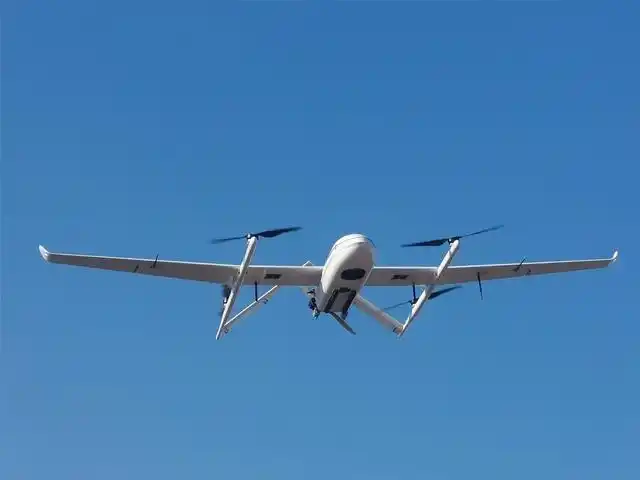
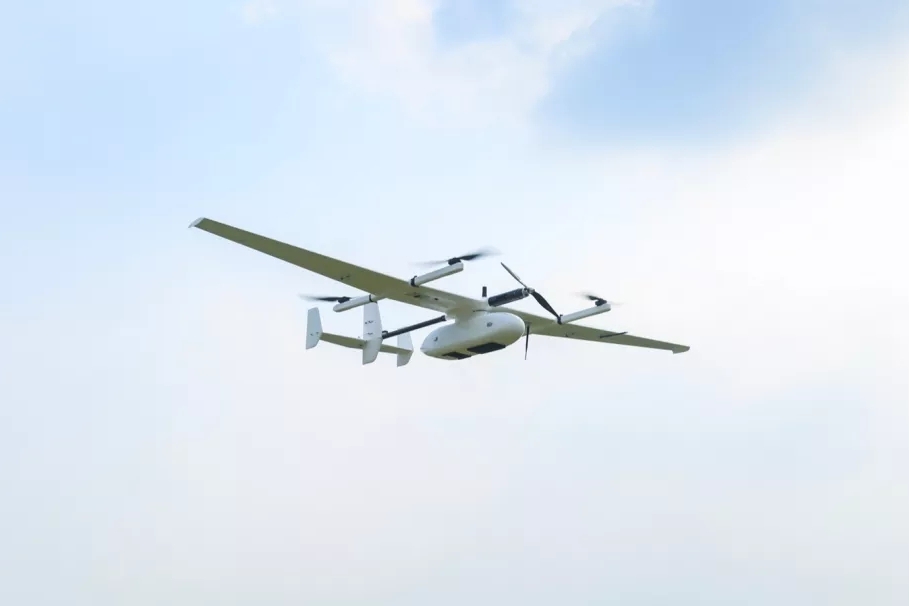
The newly launched eVTOL medical rescue route is a key measure taken by the Brazilian government to address this dilemma, and the technical support from Eve Air Mobility provides the core guarantee for the smooth operation of the route. As a local Brazilian enterprise focusing on urban air mobility solutions, Eve Air Mobility completed the first test flight of its full-scale eVTOL prototype in December 2025. The eVTOL aircraft developed by the company has the advantages of vertical take-off and landing, zero emissions, and low noise. It does not require a specially built runway and can take off and land on a flat area of only 20 square meters, perfectly adapting to the complex terrain conditions of the Amazon Rainforest. The aircraft has a cruising speed of up to 240 kilometers per hour and can fly stably under complex meteorological conditions, effectively overcoming the shortcomings of traditional rescue tools limited by terrain and weather.
Compared with traditional medical rescue methods, the advantages of the eVTOL medical rescue route are reflected in three aspects: "speed, flexibility, and accuracy". "Speed" means drastically shortening the rescue time, reducing the 4-hour commute to 20 minutes, allowing patients with acute and critical illnesses to reach medical institutions within the golden rescue time, and greatly improving the success rate of treatment; "flexibility" means flexible take-off and landing, which can directly dock at open spaces or simple platforms near tribes, eliminating the need for patient transfer and reducing intermediate rescue links; "accuracy" means that with the help of a precise navigation system, it can quickly locate the position of tribes, which is especially suitable for carrying out rescue operations in rainforest areas with dense vegetation and blocked visibility, avoiding the problems of difficult positioning and complex routes in traditional rescue.
This route is not only a major breakthrough in Brazil's medical rescue system in remote areas but also a vivid practice of applying new aviation technologies to public welfare causes. It not only solves the urgent need of indigenous peoples for timely medical treatment but also sets a benchmark for other countries and regions with complex terrain to improve medical accessibility. In the future, the Brazilian government plans to further expand the coverage of eVTOL medical rescue routes, connect more remote indigenous tribes with urban medical resources, and use technological progress to safeguard the right to health of every resident in the Amazon Rainforest, writing a new chapter of technological empowerment for public welfare.