In January 2026, the U.S. Federal Aviation Administration (FAA) officially issued new regulations on commercial drone operations, announcing a significant expansion of commercial drone operable routes from 320,000 kilometers to 500,000 kilometers. The newly added routes mainly cover the peripheral areas of densely populated regions, ultimately achieving coverage of more than 90% of the peripheries of densely populated areas. At the same time, it fully lifted restrictions on Beyond Visual Line of Sight (BVLOS) flights, abolished the previous cumbersome case-by-case exemption approval process, and simplified it to a standardized management model of "technical compliance + personnel registration". This landmark policy adjustment not only breaks the long-standing regulatory bottleneck restricting the large-scale development of the U.S. commercial drone industry, but also marks that the U.S. low-altitude economy has entered a new stage of standardized and high-speed development.
The FAA's expansion of commercial drone routes and simplification of supervision this time is not an accidental move, but a strategic choice to adapt to the trend of industrial development, respond to international competition, and activate new economic growth points. In recent years, commercial drone technology has iterated rapidly, with application scenarios continuously enriched in many fields such as logistics and distribution, agricultural plant protection, infrastructure inspection, and emergency rescue, and market demand has continued to rise. Data shows that the total number of registered drones in the United States has reached 822,000, of which 433,000 are used for commercial operations. The FAA even predicts that the scale of the commercial drone market will double next year. However, previously, the limited 320,000 kilometers of operable routes and strict restrictions on BVLOS flights have seriously restricted the release of industrial potential—enterprises had to spend a lot of time and costs applying for BVLOS flight exemptions, and insufficient route coverage made many commercial application scenarios impossible to implement. As a result, the development of the U.S. commercial drone industry lagged behind market demand, and even widened the gap with countries such as China in global competition. According to statistics, China currently accounts for 80% of the global commercial drone market, and its open regulatory environment and improved application ecology have brought enormous pressure to the development of the U.S. industry. Against this background, the FAA's policy adjustment has become a key measure to solve the difficulties in industrial development and revitalize the competitiveness of the U.S. drone industry.
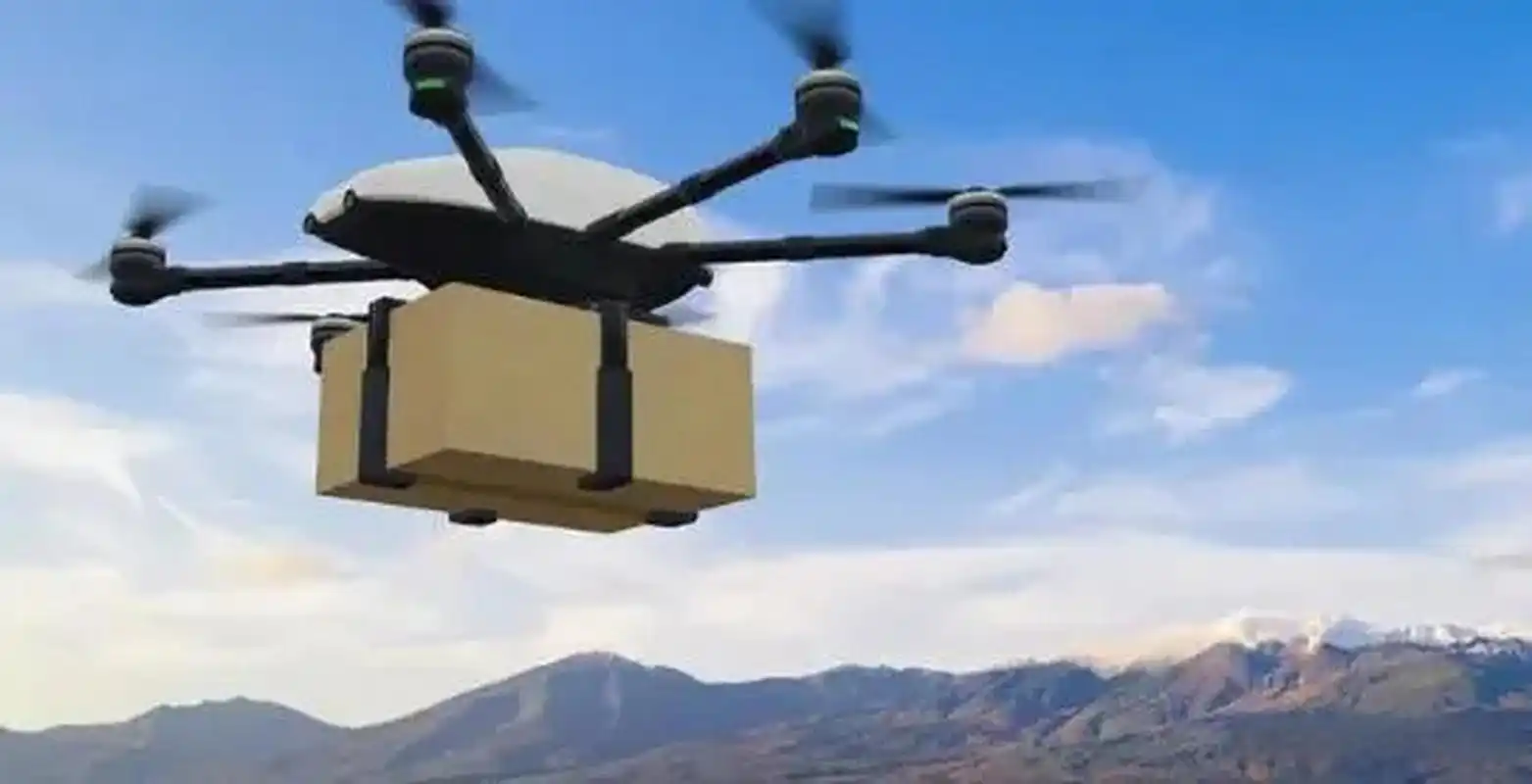
The two core measures of this policy adjustment accurately address the pain points of industrial development and are highly targeted and forward-looking. In terms of route expansion, the leap from 320,000 kilometers to 500,000 kilometers represents an increase of 56.25%. Focusing on covering the peripheries of densely populated areas, it not only avoids potential risks to public safety in the core areas of cities from drone flights, but also opens up air corridors between cities, suburbs, and remote areas, providing basic support for scenarios such as drone logistics and distribution and cross-regional inspection. For example, Amazon and other enterprises' previously promoted drone delivery business could only carry out small-scale tests in a few areas due to route restrictions. After this route expansion, the possibility of achieving their goal of delivering 500 million packages has been greatly improved, and the delivery time to remote areas is expected to be shortened from "next-day delivery" to "hour-level delivery".
The full lifting of restrictions on BVLOS flights is even the top priority of this policy adjustment. Previously, U.S. commercial drones required case-by-case applications to the FAA for exemptions for BVLOS flights, with cumbersome and lengthy approval processes, which not only increased enterprise operating costs but also restricted the implementation of technological innovation. The new regulations simplify the approval model to "technical compliance + personnel registration", that is, enterprises only need to ensure that drones are equipped with compliant technical equipment such as collision avoidance, remote identification, and automatic return in case of communication interruption, and operators complete registration and pass background checks to carry out BVLOS flights without applying for exemptions case by case. This simplification measure not only saves enterprises a lot of approval time and costs, but also frees commercial drones from the limitation of "manual monitoring", realizes the autonomy of route planning and task execution, greatly improves operational efficiency, and promotes the industry's transformation from "pilot application" to "large-scale operation". FAA Administrator Brian Bedford stated that this adjustment aims to establish a predictable and scalable regulatory framework, realize the safe integration of drones with the national airspace system, and fully release the social and economic value of drones.
The implementation of the policy will have a profound impact on relevant U.S. industries and activate the development vitality of the entire low-altitude economic industrial chain. In directly benefited areas, drone manufacturing enterprises will usher in explosive growth in orders, especially those with compliant technical equipment, which will gain an advantage in market competition; application fields such as logistics, agriculture, and energy will expand the scale of drone applications with the policy dividends, reduce operating costs, and improve work efficiency—for example, the agricultural field can realize large-scale precision plant protection through BVLOS drones, the energy field can complete long-distance unmanned inspection of power lines and oil and gas pipelines, and the emergency rescue field can use drones to quickly reach remote disaster areas for rescue material delivery and topographic survey. At the same time, industrial development will also spawn new employment forms, and emerging occupations such as drone maintenance engineers, route planning algorithm engineers, and airspace compliance consultants will continue to emerge, promoting the transformation of the employment structure from "labor-intensive" to "technical collaboration".
It is worth noting that the liberalization of policies does not mean the absence of supervision. While releasing industrial vitality, the FAA also pays attention to preventing potential safety risks. The new regulations clearly require that drones for BVLOS flights be restricted to fly below 400 feet (about 122 meters) of airspace, be equipped with necessary collision avoidance and identification technologies, and operators pass background checks; at the same time, drones are prohibited from carrying out BVLOS flights over densely populated areas such as large public gatherings and sports events to prevent safety hazards such as air collisions and privacy leaks. In addition, the FAA will work with institutions such as the Department of Homeland Security and the National Transportation Safety Board to strengthen dynamic supervision of drone flights and improve emergency response mechanisms to ensure the safe and orderly operation of low-altitude flights.
In general, the FAA's expansion of commercial drone routes and lifting of BVLOS flight restrictions this time is an important turning point in the history of U.S. low-altitude economic development. It not only reflects the U.S. government's determination to promote industrial innovation and enhance global competitiveness, but also provides clear policy guidance for the development of the commercial drone industry. Although the U.S. drone industry still faces challenges such as an imperfect local industrial chain and market dependence on foreign products, this policy adjustment will undoubtedly inject strong momentum into industrial development. In the future, with the gradual implementation of policies and the continuous improvement of supporting measures, the U.S. commercial drone industry is expected to achieve leapfrog development, the low-altitude economy will become a new bright spot in U.S. economic growth, and it will also have an important impact on the development pattern of the global drone industry.
Previous:Overview of Low altitude Flight Industry
Next:No