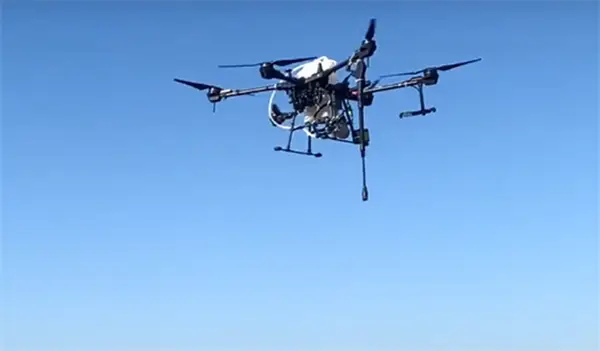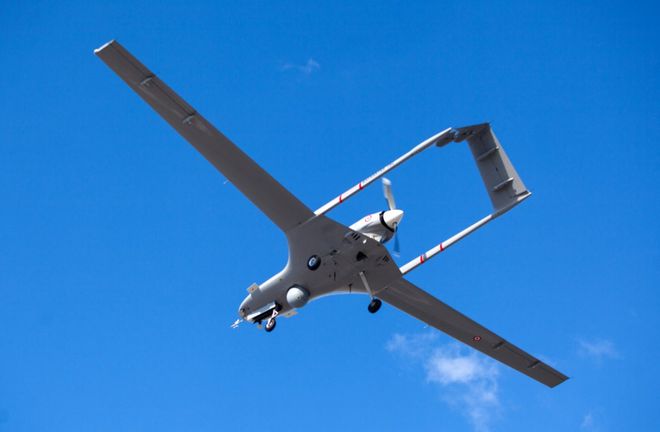

In the impression of most people, drones may just be a "flying camera", an aerial tool that records magnificent mountains and rivers and completes cool camera movements. However, behind this light and soaring figure lies the deep integration of cutting-edge technologies from multiple fields. The true charm of drones lies not only in flight and photography, but also in their precise and coordinated "brain", "cerebellum", and "sensory system" - which together form an intelligent aerial robot.
Real time shooting of DJI "Yu" Mavic Air 2 aerial drone
1、 Brain: Flight Control System - The Intelligent Center of Drones
The Flight Controller (abbreviated as FLC) is the true "brain" of a drone. It integrates high-precision sensors such as gyroscopes, accelerometers, and barometers to monitor flight attitude, altitude, and acceleration in real-time at a frequency of hundreds of times per second.
With the help of complex control algorithms such as PID controllers, flight control can process data at the millisecond level and dynamically adjust motor speed, effectively resisting wind disturbances and achieving near perfect stable hovering and smooth flight. This ability far exceeds the manual operation limit of humans and is also the fundamental reason why drones can fly autonomously.
2、 Cerebellum: Navigation and Positioning System - Direction Sense of Drones
In addition to relying on global satellite navigation systems such as GPS and GLONASS to obtain latitude and longitude coordinates, modern drones also have amazing local positioning capabilities - visual positioning systems (VPS).
Through the optical camera and ultrasonic sensor at the bottom of the body, the drone can capture ground texture in real time and measure relative height. Even in indoor or urban canyons without GPS signals, it can achieve precise positioning and smooth flight like bat echolocation, becoming a key support for its autonomous operation in complex environments.
3、 Sensory System: Mission Payload - Drone's' Super Eye '
The reason why the application of drones can penetrate into various industries lies in their diverse mission payloads, which constitute the "sensory system" of drones:
Visible light camera: It is no longer just a tool for consumer level aerial photography, but also a basic equipment for surveying, inspection, and news gathering;
Thermal imaging camera: endowing drones with "night vision eyes", widely used in fire search and rescue, power inspection, night monitoring, etc;
Multispectral camera: analyzes crop health status through different wavelengths of light, providing data support for smart agriculture;
Lidar: By scanning the environment with laser pulses, high-precision 3D maps are constructed for terrain mapping, building modeling, and even archaeological discoveries.
4、 Collaborative Systems: Communication, Energy, and Obstacle Avoidance
In addition to the three core systems, the efficient operation of drones also relies on a series of supporting technologies:
Communication link: Implement remote control, image transmission, and data transmission to ensure remote control and real-time data feedback;
Intelligent battery and power system: providing strong and efficient flight capabilities, and collaborating with flight control to achieve battery level prediction and low battery automatic return;
Obstacle avoidance system: Sensing obstacles through visual, infrared, millimeter wave radar and other technologies to achieve autonomous maneuvering and flight safety.
Conclusion: The future of drones is the fusion of intelligent flying robots
The next time you look up at a drone in the sky, you will no longer only see a flying camera, but a precision system that integrates aerodynamics, automatic control, sensing technology, artificial intelligence, and the Internet of Things. Every technological breakthrough is driving the evolution of drones towards smarter, more autonomous, and broader application scenarios.
It is not only the culmination of modern engineering technology, but also an important tool for humans to expand the boundaries of perception and action. The era of drones has just begun.