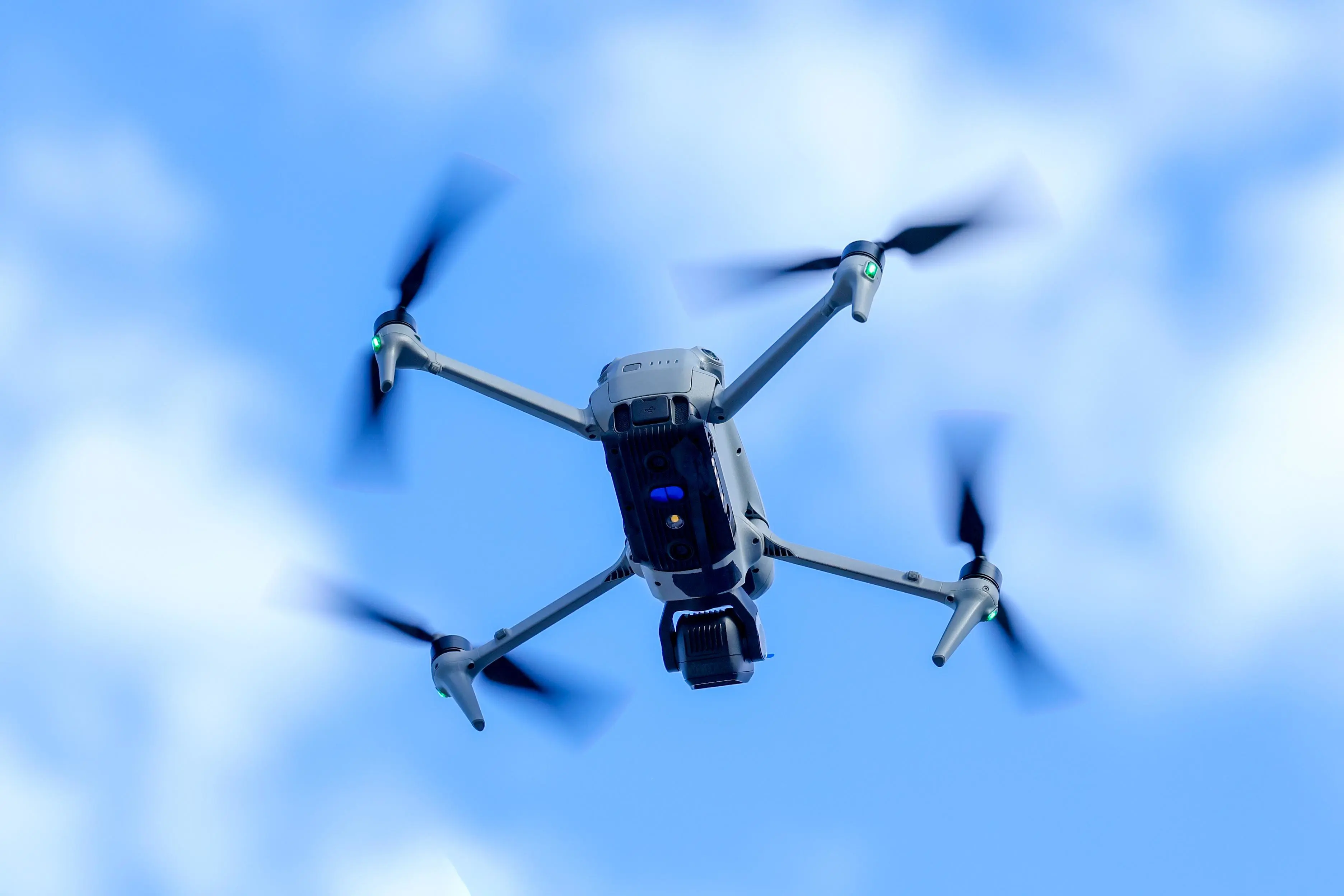
In early February 2026, the European Union Aviation Safety Agency (EASA) formally issued the Urban Air Mobility (UAM) Certification Specification, marking the first unified airworthiness standard for electric vertical takeoff and landing (eVTOL) aircraft across all 27 EU member states. It also sets a clear target to certify the first 5 aircraft models by 2027. This milestone move not only resolves Europe’s long-standing problem of fragmented eVTOL certification standards but also builds a critical bridge between technical development and commercial deployment, injecting strong momentum into Europe’s low-altitude economy and reshaping the competitive landscape of the global eVTOL industry.
As one of the world’s leading authorities on aviation safety regulation, EASA has been at the forefront of eVTOL airworthiness certification. Back in 2019, it released SC-VTOL, a dedicated airworthiness standard for vertical takeoff and landing aircraft, establishing a safety-level-based certification framework. However, individual EU countries still maintained separate certification rules, forcing companies to navigate “one country, one standard” and repeat certification processes.
Over the previous decade, European firms invested over €3 billion in eVTOL R&D and developed multiple prototypes, yet commercial passenger flights remained out of reach due to chaotic standards and lengthy certification cycles. Industry leaders such as Germany’s Lilium and Volocopter even faced bankruptcy or acquisition, exposing a stark reality: Europe’s eVTOL sector suffered from a “booming R&D, stalled deployment” dilemma.
The newly released Urban Air Mobility (UAM) Certification Specification is EASA’s systematic response to these pain points. Its core value lies in unified airworthiness standards across the EU, balancing safety and commercial efficiency. Unlike the previous fragmented rules, the new specification is tailored to eVTOL’s defining features—electrification, multimodal flight, and low-altitude operation—and sets uniform requirements for aircraft design, power systems, flight control, safety redundancy, and other key areas. It clarifies critical review criteria including multimodal flight safety, battery system safety, and electric propulsion reliability.
For instance, addressing industry weaknesses such as insufficient battery energy density and thermal runaway risks, the specification defines strict battery safety protections, requiring high-level resistance to thermal runaway propagation and high-power discharge capability. For multirotor, tilt-rotor, and other configurations, it adopts differentiated review standards to scientifically match design choices with operational scenarios.
The concrete goal of certifying the first 5 models by 2027 provides the European eVTOL industry with a clear timeline, pushing for streamlined certification processes and accelerated R&D. This target is not arbitrary: it is based on a comprehensive assessment of Europe’s eVTOL technological maturity and corporate development progress, covering mainstream configurations such as multirotor and composite wing, and supporting use cases including urban short-haul connections and scenic tourism.
According to EASA officials, the new certification specification will adopt a risk-based approach. While upholding the safety baseline, it will simplify unnecessary review procedures and shorten certification cycles, breaking the vicious cycle of “long certification times and heavy capital consumption” and helping companies accelerate commercialization.
Industry Impact
The launch of this unified certification framework will fundamentally transform Europe’s eVTOL ecosystem.
On one hand, uniform standards will reduce R&D and certification costs, eliminate redundant investments, attract more capital and enterprises, and stimulate industrial innovation. They will also promote coordinated development of low-altitude transportation infrastructure, such as vertiports.
On the other hand, the clear certification timeline will speed up technological iteration, pushing companies to breakthroughs in core fields including battery energy density, flight control redundancy, and noise reduction. Compared with traditional helicopters, eVTOLs can reduce noise by approximately 15 decibels. Combined with unified certification, this advantage will help them gain greater public acceptance in urban areas and unlock the vast market of urban air mobility.
Global Competitive Landscape
EASA’s move further strengthens Europe’s voice in global eVTOL airworthiness certification.
The global eVTOL industry is at a pivotal stage shifting from technical verification to commercialization. China’s CAAC uses a “highly coordinated” certification model, the U.S. FAA adopts a “performance-based” approach, and the three major authorities have formed distinctive systems.
With unified EU standards, EASA sets an example for regional integrated certification. Its standards are likely to become an important reference for global eVTOL airworthiness regulation, giving European companies an edge in global competition and laying the groundwork for international alignment of eVTOL certification rules.
Remaining Challenges
Commercial deployment of Europe’s eVTOL industry still faces hurdles.
Despite unified certification, challenges remain: lagging vertiport construction, incomplete airspace management regulations, and insufficient public trust in safety. Technical bottlenecks such as limited range and payload caused by low battery energy density continue to constrain industrial growth. Furthermore, EASA must carefully balance safety oversight and commercial efficiency to avoid slowing deployment through excessive regulation.
Conclusion
Overall, the release of EASA’s Urban Air Mobility (UAM) Certification Specification represents a pivotal turning point for Europe’s low-altitude economy, signifying a shift from “fragmented R&D” to “coordinated deployment” in Europe’s eVTOL sector.
As the 2027 target for certifying the first batch of models advances, Europe is poised to gradually break down barriers to low-altitude commercialization and reshape urban transportation, offering a replicable “European model” for the global low-altitude economy.
Backed by unified certification, coupled with technological breakthroughs and improved infrastructure, Europe’s eVTOL industry is expected to emerge from its past difficulties and enter a period of commercial takeoff, while driving global air mobility toward a more efficient, green, and intelligent era.